
OperationsEco Practices
How to sanitize dog gear without ruining your lawn
How we clean scooping gear between yards, which organisms an enzymatic cleaner does not touch, and the one label test the EPA actually gives you.
Field Ops Lead, InsightScoop
5 min read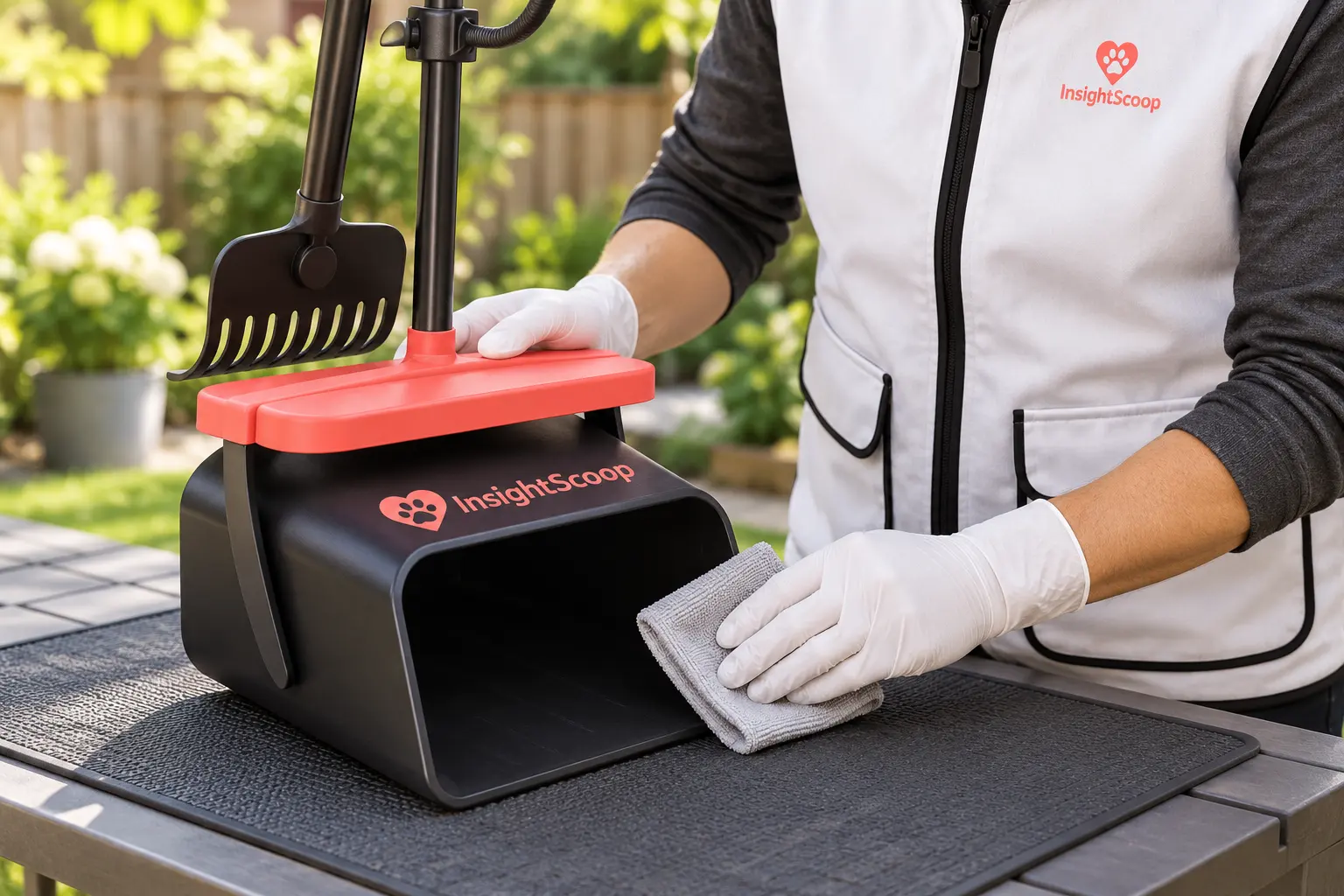
The gear protocol, and one correction
We clean gear in three steps: pre-rinse, a pet-safe enzymatic cleaner, then a 70 percent isopropyl wipe on high-touch surfaces like scoop handles and phone mounts.
Correction, and it matters more than the protocol does. An enzymatic cleaner breaks down organic residue. It is not a disinfectant, and it does not inactivate giardia, parvovirus or roundworm eggs, which is exactly what an earlier version of this page claimed it did.
Canine parvovirus is a non-enveloped virus and it lasts. The Merck Veterinary Manual puts indoor survival at at least two months, and outdoor survival, protected from sunlight, at many months and possibly years. What Merck lists as effective is dilute bleach, potassium peroxymonosulfate, or accelerated hydrogen peroxide. It also warns that quaternary ammonium disinfectants are not reliable against parvovirus. An enzyme cleaner is not on that list either.
Roundworm (Toxocara) eggs are harder still. The Companion Animal Parasite Council puts it plainly: common disinfectants are not effective at killing them. The measures CAPC does list are physical, and severe, including steam, prescribed burns, or removing the topsoil.
There is also no EPA list for canine parvovirus, so do not go looking for one. EPA's List G, which gets cited for this, covers norovirus. The test EPA actually hands you is the label: if a product's label does not carry disinfection directions for a pathogen, EPA has not reviewed any data on whether it works against that pathogen. Read the label, not the marketing, and that includes reading ours.
Credible references
DIY sanitation checklist
Use a dedicated rinse bucket so contaminants never run into a storm drain.
Scrub tools with a stiff brush, leave the enzyme solution on for at least 60 seconds, then rinse with low-pressure water. This removes soil. It is the step before disinfection, not a replacement for it.
Finish with a 70 percent isopropyl wipe on handles, phone mounts, and anything your hands touch between yards.
When to escalate
After a confirmed parvovirus case, treat the ground as contaminated for a long time rather than for a weekend. Ask your veterinarian before letting a puppy or an unvaccinated dog back onto it, and follow their timeline. An earlier version of this page said 48 hours. Against the survival figures above, that was wrong, and it is gone.
For roundworms the control is physical. Eggs are not infective when they are passed and need weeks in the environment to become so, which is exactly why prompt pickup works and why a cleaner does not.
InsightScoop does not sell a disinfecting or sanitizing add-on. Deodorizing is the only paid add-on in our pricing engine, and it treats odor, not pathogens. If any service tells you its cleaner is enough after a parvo case, that is not a claim a cleaner can carry: ask which EPA-registered product it uses, and read what the label says.
Found this helpful? Share with other dog parents.
About the Author
Field Ops Lead, InsightScoop
House byline
A house byline for whoever is planning routes and gear for the Twin Cities beta. Scoopers are independent contractors rather than employees, and the company is pre-launch, so what you are reading is the practice we intend to run rather than a record of years already spent doing it.
Related articles

Need a yard assessment?
Join the Twin Cities beta for weekly service. Your scooper logs every pickup and photographs the stool from a phone, so you get a dated 3C observation to hand to your vet.