
Austin, TX.
InsightScoop is hiring an Austin crew. Weekly dog waste removal with AI stool scoring, scheduled around an August that runs weeks at a time over a hundred degrees and built for ground that splits open when the clay dries out.
August heat, drought, cracked ground
August cracks the ground open. The visit does not get shorter.
- Heat, drought, cracked ground
- By August the ground has opened into cracks wide enough to swallow what is on it, and dormant Bermuda hides the rest. Crews work the early window before the heat, walk the live oak drip line and the cracked seams rather than only the open lawn, and treat a scorched dormant yard as a full visit instead of a short one.Early window, drip line and seams walked.
- Where it hides
- Live oak and cedar elm shade is where the dog spends August, so the drip line carries more than the open lawn does. Dormant Bermuda and thin St Augustine hide finds at ground level, which is why crews walk the seams rather than scanning across.live oak, cedar elm, Bermuda, St Augustine
The visit
What every visit leaves behind.
- 01Scoopers
- Every scooper is background-checked before their first route, and those with their own insurance show an Insured badge.
- 02The yard
- The whole yard, corners included, in a lawn-safe pattern. The waste is bagged and taken away.
- 03The gate
- The gate is shut and photographed on the way out, and the photo reaches your phone. You need not be home.
- 04The record
- Each visit records a color, consistency and content read in the app, dated, so a change has something to be compared against.
- 05One thread
- Skips, reschedules and gate notes go through one thread with your scooper in the app.
- 06How often
- Weekly service keeps most yards guest-ready, and busy multi-dog homes can add a mid-week visit so nothing piles up.


Coverage
Service Area
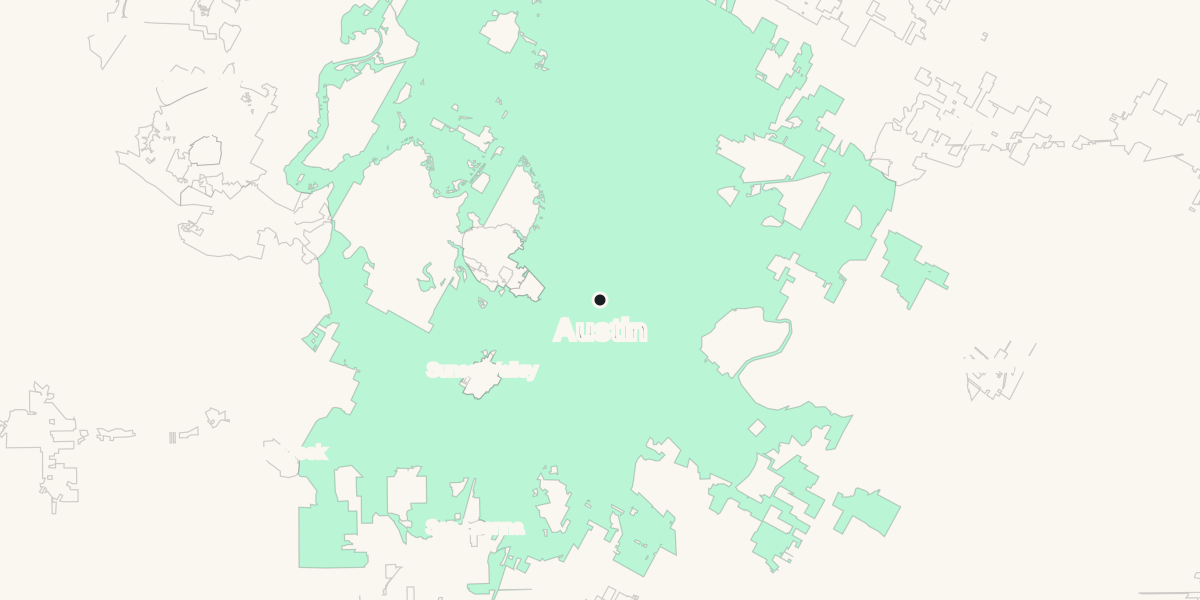
ZIP codes served
Austin, one neighborhood at a time.
Each guide covers what is particular to that part of the city: the yards, the access and the local rules worth knowing.
- Zilker
- Small older houses on the streets that back onto the park, which for two weekends every October stops being a park and becomes a festival ground. Zilker yards are compact, shaded by live oak, and used hard by dogs that also use the greenbelt.
- Mueller
- Built on the old municipal airport land, so the streets are new, the lots are deliberately small and the garages open onto alleys. The design trades private yard for shared green space, which means most Mueller dogs relieve themselves somewhere the whole block can see.
- Hyde Park
- A late nineteenth-century streetcar suburb of bungalows and garage apartments on a tight grid north of the university. Rear units and shared driveways mean two households often use one back yard, and neither of them thinks the mess is theirs.
- Travis Heights
- Hilly streets that curve rather than grid, with mature live oaks, limestone outcrops and yards that fall away toward Blunn Creek. Gravity does most of the sorting here, and it sorts downhill into the same two corners of every lot.
- South Congress (SoCo)
- Bungalows and duplexes behind one of the busiest commercial strips in the state. Short-term rentals turn over constantly on these blocks, so the dogs in a given back yard are frequently not the same dogs as last week.
- East Austin
- East of the interstate the soil is Blackland Prairie clay, black and heavy, and it is the reason this side of town cracks open in a dry August. Waste falls into the cracks and stops being visible from standing height.
- Bouldin Creek
- Small lots between South First and South Congress, half original bungalow and half rebuild, with chickens and vegetable beds in more back yards than people expect. Working around productive ground is the job here, not just around grass.
- Barton Hills
- Ranch houses on the ridge above the Barton Creek greenbelt, with limestone close under a thin layer of soil and trail access at the end of several streets. Thin soil over rock means almost nothing sinks in, and everything stays exactly where the dog left it.
Local sources
The municipal and veterinary pages we point owners here to, so the rules and the health advice come from the people who set them.
Frequently asked questions
How does Austin's August heat change the schedule?
Austin routes move to early morning through the worst of the summer. The city runs long strings of days above a hundred degrees, and heat that hard is a safety limit on the crew before it is a comfort question. It also changes the yard: waste dries to the ground within hours, so an early pass lifts cleanly where an afternoon pass would not.
How often does InsightScoop clean yards in Austin?
Weekly for most of the city. Multi-dog homes in Hyde Park and Travis Heights often add a mid-week visit through the humid stretch, when waste breaks down fast enough that a full week of it stops being one job and becomes several.
What happens on a clay yard when the ground cracks?
East of I-35 the Blackland Prairie clay opens up in a dry summer and waste drops into the cracks, out of sight from standing height. The crew works those seams rather than sweeping the surface. If watering-day rules let you run the sprinklers the evening before, the clay closes up and gives most of it back.
Does InsightScoop offer AI stool monitoring in Austin?
Yes. The scooper photographs the stool from a phone and the app records a color, consistency and content read at every visit. It is not a diagnosis, but for dogs that swim at Barton Creek or Lady Bird Lake a weekly dated record is what separates a one-off from a pattern worth showing your vet.
Can I get proof-of-service photos for my Austin property?
Each visit ends with timestamped photos and gate confirmation logs. South Congress short-term rentals and Mueller HOA properties rely on it most, because in both cases the person who needs the proof is not the person standing in the yard.
When will InsightScoop launch in Austin?
The Austin scooper network is being built now. Join the waitlist and we will notify you the moment service opens in your zip code.
A clean yard, and a record of every visit.
We are not scooping in Austin yet. Join the waitlist and we will tell you when a crew is here.