
Indianapolis, IN.
InsightScoop is building an Indianapolis crew. Weekly dog waste removal with AI stool scoring for a city built on heavy glacial clay, where the ground freezes solid in January, turns to mud in March, and drains into the White River either way.

January snow load, April mud season
Clay does not drain. We come on the thaw day anyway.
- Thaw over clay
- Glacial clay does not drain, so a February thaw turns a yard to standing mud and a hard refreeze locks whatever is in it into the ground. Crews work the low corners and the downspout runs on the thaw days rather than waiting for a dry week that may not come, and every visit is logged with the ground condition we found.Booked on thaw days, not dry ones.
- What the yard is made of
- Fescue and clover over glacial clay hold water long after the rain stops, and oak and maple litter mats on top of it. Crews clear the mat rather than working around it, because what is under it does not dry out on its own.maple, oak, boxelder, fescue, clover
The visit
What every visit leaves behind.
- 01Scoopers
- Every scooper is background-checked before their first route, and those with their own insurance show an Insured badge.
- 02The yard
- The whole yard, corners included, in a lawn-safe pattern. The waste is bagged and taken away.
- 03The gate
- The gate is shut and photographed on the way out, and the photo reaches your phone. You need not be home.
- 04The record
- Each visit records a color, consistency and content read in the app, dated, so a change has something to be compared against.
- 05One thread
- Skips, reschedules and gate notes go through one thread with your scooper in the app.
- 06How often
- Weekly service keeps most yards guest-ready, and busy multi-dog homes can add a mid-week visit so nothing piles up.


Coverage
Service Area
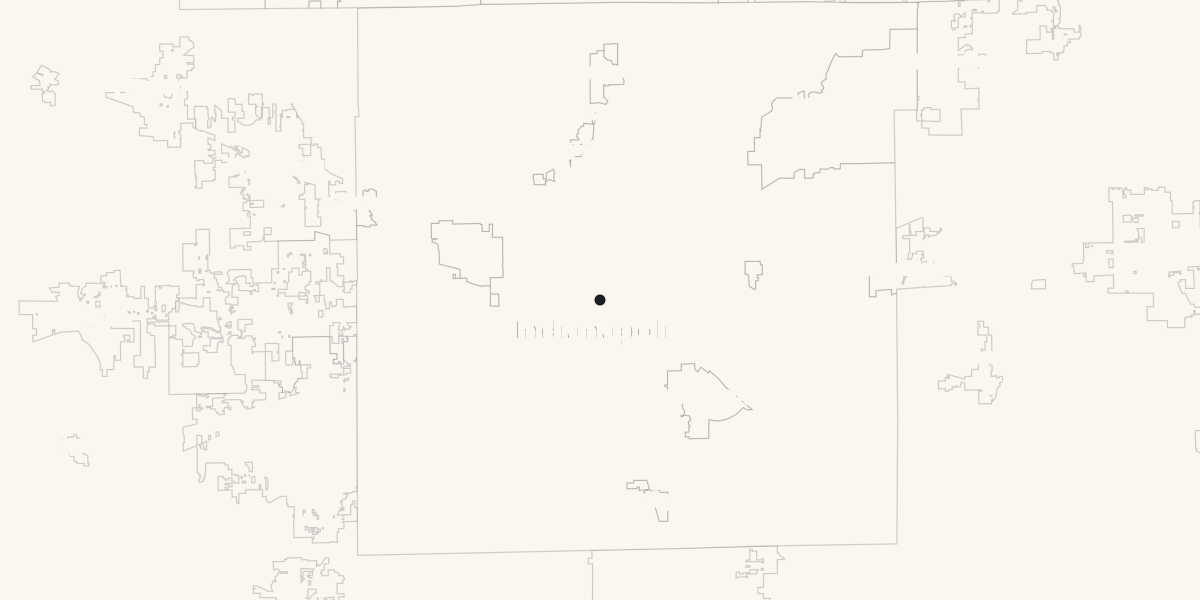
ZIP codes served
Indianapolis, one neighborhood at a time.
Each guide covers what is particular to that part of the city: the yards, the access and the local rules worth knowing.
- Broad Ripple
- Small lots, service alleys and the Monon running straight through the middle of it. Broad Ripple dogs cover more public trail mileage per week than dogs anywhere else in the county, and the canal towpath adds standing water to that.
- Meridian-Kessler
- Big early-century houses on deep lots under a canopy of mature oak and maple, with detached garages off the alley. The canopy is the operational fact: the leaf load in late October buries a month of the yard in about ten days.
- Butler-Tarkington
- The blocks between the university and the canal, a mix of long-held family homes and student rentals on the same street. Two very different standards of yard care sit side by side here, and the fence between them is usually the only thing separating them.
- Irvington
- An old east-side streetcar suburb laid out on curves instead of a grid, with wide lots, Victorian housing stock and Pleasant Run cutting through it. Yards here are big enough that a weekly visit finds things a homeowner genuinely did not know were there.
- Fountain Square
- Dense near-southside blocks of shotgun houses and doubles, most with a yard barely wider than the house and an alley behind. Small ground plus renovation traffic means construction debris and waste end up in the same corner.
- Herron-Morton Place
- A historic district of tall Victorians on deep, narrow lots north of downtown, many carved into two or three units. One long yard shared by three households is the normal case rather than the exception.
- Bates-Hendricks
- Tight lots and rapid renovation on the near south side, with new fences going up faster than the ground under them settles. On this clay a fence set last spring often has a gap under it by the following spring.
- Nora
- North-side ranch houses on generous lots with the Monon at one edge and mature woodland at the other. Large flat yards with deep grass are the easiest kind to under-serve, because from the patio door they always look fine.
Local sources
The municipal and veterinary pages we point owners here to, so the rules and the health advice come from the people who set them.
Frequently asked questions
What does Indianapolis mud season do to my yard?
March and early April are the hard part of the year here, not January. The clay under most of Marion County holds water, so the thaw turns the yard soft for weeks and everything the freeze preserved surfaces at once. Routes are planned with a catch-up pass in that window, because a winter of missed pickups and a soft clay lawn is the combination that damages turf.
How often does InsightScoop clean yards in Indianapolis?
Weekly keeps most Indy yards usable. Broad Ripple and Meridian-Kessler homes with more than one dog often add a mid-week visit in spring and fall, when trail mud and leaf litter both make a single weekly pass work harder than it should.
Does winter stop service in Indianapolis?
No, though it changes the method. Indiana winters here are more ice than deep snow, and frozen waste comes up cleanly if it is worked before the afternoon softens it. What does not work is leaving it: dry cold preserves everything until the March thaw releases all of it in the same week.
Does InsightScoop bring AI stool analysis to Indianapolis?
Yes. The scooper photographs the stool from a phone and the app records a color, consistency and content read at every visit. It is not a diagnosis, but for dogs that use the Monon, Eagle Creek Park or the canal towpath the weekly record lets your vet see a change as a trend rather than a single sample.
Can I request proof-of-service photos in Indianapolis?
Every visit includes timestamped proof photos and locked-gate confirmation. Fountain Square and Butler-Tarkington rentals lean on that hardest, because the person paying for the service is usually not the person living with the yard.
When will InsightScoop launch in Indianapolis?
The Indianapolis crew is being recruited now. Join the waitlist and we will contact you when service opens in your zip code. Waitlist members get first access and priority scheduling.
A clean yard, and a record of every visit.
We are not scooping in Indianapolis yet. Join the waitlist and we will tell you when a crew is here.